
The Federal Tax Credit for Commercial EV Chargers Is Gone. Here’s What Still Makes the Math Work.
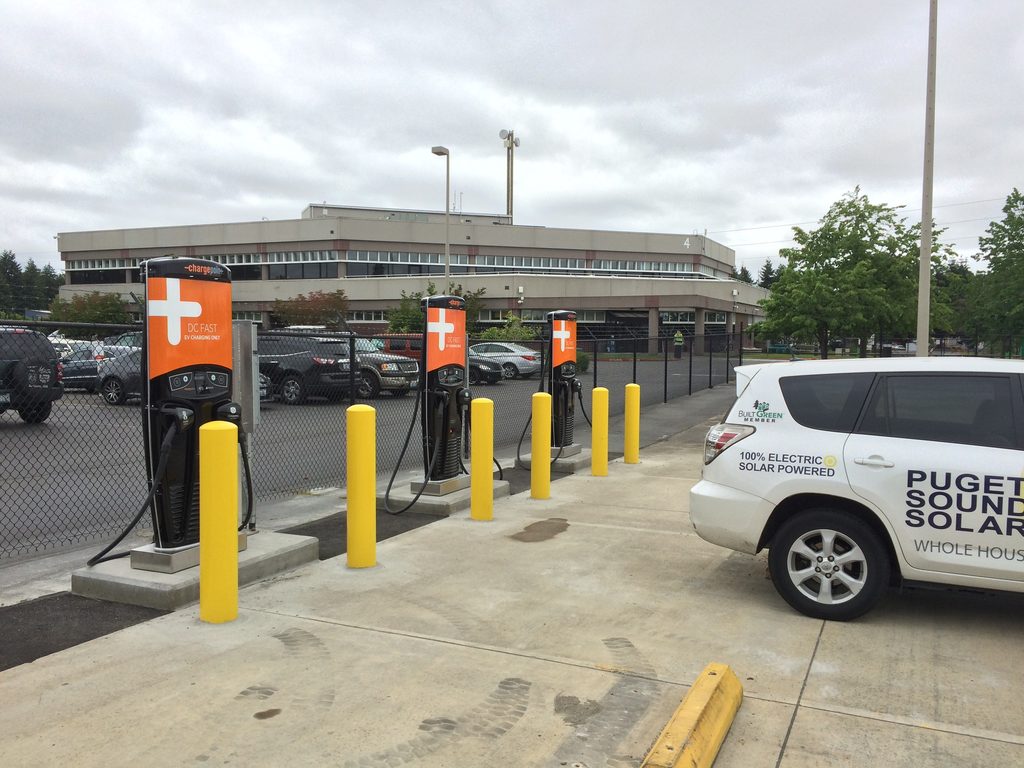
If you’ve been planning a commercial EV charging project around the federal tax credit, it’s time to update the spreadsheet. Section 30C, the credit that covered 30% of a commercial charger’s installed cost up to $100,000 per unit, expired for good on June 30, 2026. There’s no extension, no phase-down, no grace period. If your chargers weren’t placed in service by that date, the credit isn’t available to you.
We’ve covered charger tax credit changes on this blog going back to 2016, when the credit was first extended, and again in 2020 when it came back retroactively. This time it’s not coming back. That changes the ROI conversation for a lot of projects that were penciling out around a 30% federal offset.
PSE’s make-ready program is still a real number, and it’s bigger than the tax credit was. If you’re in Puget Sound Energy territory, their “Up & Go Electric for Fleet” program offers up to $250,000 per charging location, structured two ways. PSE can own and operate the charging equipment for you, handling design, installation, and ten years of maintenance, with incentives up to $125,000 per DC fast charging port and $12,000 per Level 2 port. Or you can own the equipment yourself and still collect up to $60,000 per DCFC port and $4,000 per L2 port. There’s also an enhanced tier, up to $150,000 per vehicle, for fleets serving highly-impacted or vulnerable communities, plus ongoing monthly bill credits for off-peak charging. For most fleet and commercial property projects we look at, this program alone is worth more than the old federal credit was.
Washington state grant money. The Washington EV Charging Program awarded another $37.3 million in June, bringing the program to $135 million total across 43 organizations and 104 projects, targeting 754 new charging ports by late 2027. Six million of that round was earmarked specifically for multifamily housing. If you’re a commercial property owner, a fleet operator, or a municipality, this is a source of project funding that doesn’t depend on the federal picture.
Bonus depreciation. OBBBA restored 100% bonus depreciation, and charging equipment installed as part of a business’s operations typically qualifies as depreciable property. That’s a meaningful tax benefit independent of 30C, worth running past your accountant when you’re comparing project economics, since the specifics depend on your business’s situation.
If you had a commercial charging project sitting on the shelf waiting for the tax situation to settle, it just settled, and not in the direction anyone was hoping for. But there’s still real money on the table from the state and from PSE specifically.